

- Free delivery - no obligation
- Call 5 hours to +60 countries from Denmark
- Satisfaction guarantee

- No binding
- Cheap telephony
- Free delivery - no obligation
- Free voice, 40GB in DK, 5 Hours in EU
- Satisfaction guarantee
- No binding
- Cheap telephony
- Get your first month FREE
- Call 10 hours to +60 countries from Denmark
- Satisfaction guarantee
- Get your first month FREE
- Call 10 hours to +60 countries from Denmark
- Satisfaction guarantee
- No binding
- Cheap telephony
- No binding
- Cheap telephony
- Call 10 hours to +60 countries from Denmark
- Satisfaction guarantee
- Get your first month FREE
- Call 10 hours to +60 countries from Denmark
- Satisfaction guarantee
- No binding
- Cheap telephony
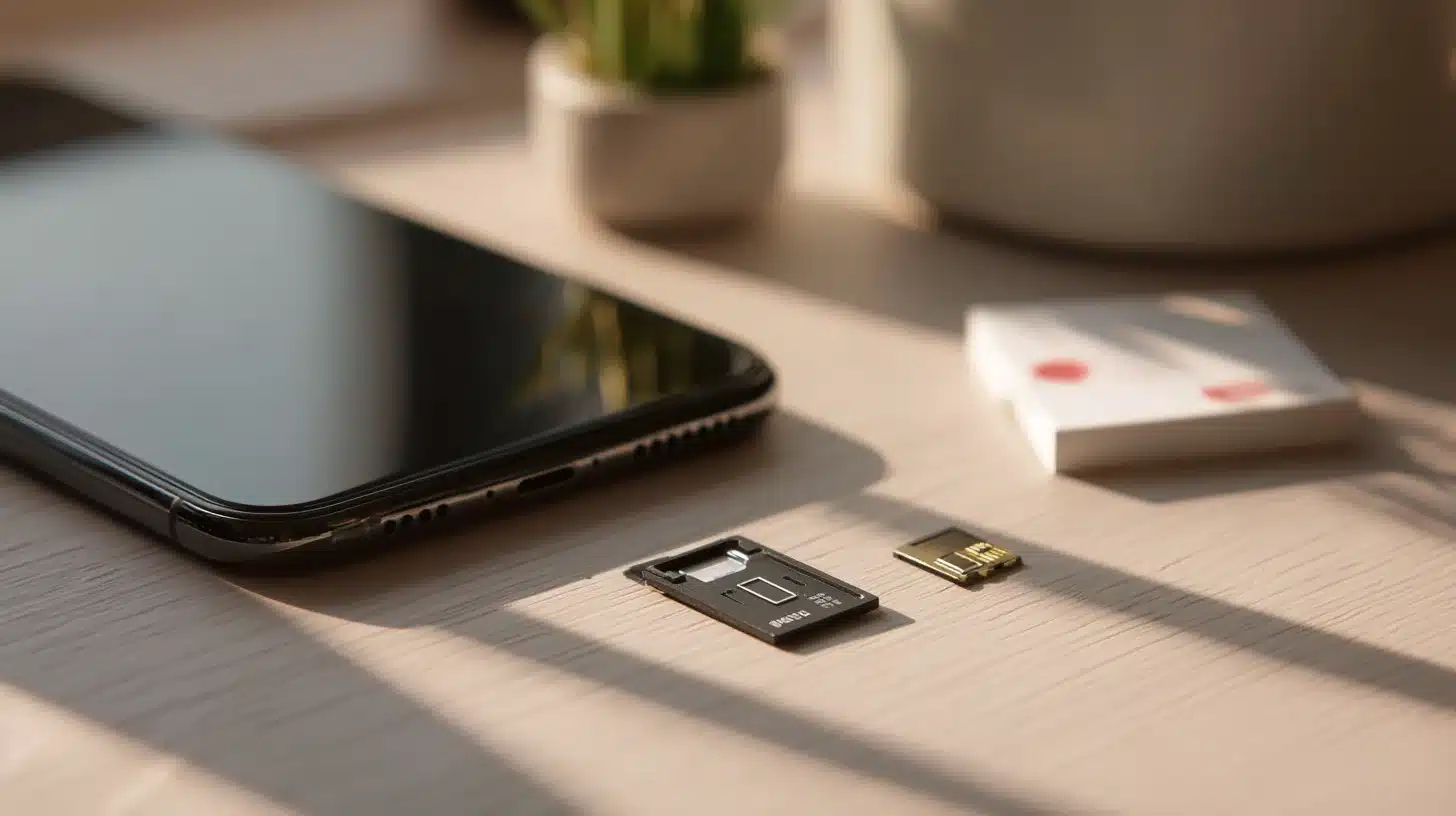
Getting a prepaid SIM card in Denmark is the fastest way to secure mobile connectivity upon arrival. The Danish telecommunications market is highly digitized, competitive, and generally offers lower prices than many other Western European countries. For an expat or traveler, understanding the distinction between immediate prepaid options and long-term subscriptions is vital. Access to standard monthly contracts is restricted until you obtain specific residency documentation.
Prepaid SIM Cards: Where and How to Buy
Prepaid cards are widely available. You can purchase physical SIM cards at:
- Convenience Stores: 7-Eleven and Circle K kiosks stock SIM cards behind the counter.
- Supermarkets: Large chains like Føtex, Bilka, and sometimes Netto or Meny carry them near the checkout or in the electronics section.
- Electronic Stores: Retailers like Elgiganten or Power.
- Kiosks: Independent corner shops often sell Lyca Mobile or Lebara starter packs.
Registration Requirements
While you do not need a CPR number for prepaid cards, Denmark has anti-terrorism laws that require SIM card registration. You cannot simply buy a card and use it anonymously.
When you buy a starter pack (startpakke), you must register the SIM card online to activate it. This process usually requires:
- Entering the SIM card number (ICCID).
- Providing your name and email.
- Verifying your identity using a passport or foreign ID card.
Some providers allow you to upload a photo of your passport page. Once the ID is verified, the line becomes active. This process is usually fast but is a mandatory step before the data or voice services will work.
Top Providers for Prepaid
Two main providers dominate the prepaid market for foreigners:
- Lebara: Runs on the Telia/Telenor network. Known for clear pricing and English-language support. Packages often include free minutes to international numbers.
- Lyca Mobile: Runs on the Telia/Telenor network. Offers similar bundles to Lebara. Popular for international calling rates.
These providers operate on a “package” system. You do not pay per minute. Instead, you buy a 30-day bundle (e.g., 100 GB data and 10 hours of talk time) for a fixed price. You can renew this with a foreign credit card.
eSIM Technology in Denmark
Denmark is advanced in adopting eSIM technology. An eSIM (embedded SIM) is a digital version of the physical card. It allows you to activate a mobile plan without inserting a piece of plastic into your phone.
Benefits for Travelers
For short-term visitors or those who have not yet arrived, eSIM Denmark plans are highly convenient. You can purchase and install the eSIM profile while you are still in your home country. As soon as your plane lands in Kastrup or Billund, your phone connects to the local network.
This eliminates the need to find a 7-Eleven at the airport or struggle with SIM ejector tools. Most modern smartphones (iPhone XR and newer, recent Samsung Galaxy S series) support eSIM.
Requirements for Mobile Plans
The type of mobile plan you can access depends entirely on your residency status. The Danish system draws a hard line between anonymous usage and verified residents.
The CPR Number Barrier
The Central Person Register (CPR) number is the personal identification number for all residents in Denmark. You receive this number only after your residence permit is approved and you have registered an address with the municipality (Kommune).
Most traditional postpaid mobile contracts require a CPR number. Telecom companies use this to perform credit checks and link the account to your legal identity. If you have just arrived and are waiting for your yellow health card (Sundhedskort), you cannot sign up for a standard subscription with major carriers like YouSee or Telia.
MitID and Digital Verification
Beyond the CPR number, signing up for a subscription online requires MitID. MitID is the national digital signature used for banking, taxes, and accessing public services. It serves as your digital ID.
When you purchase a subscription from a provider like Oister Denmark or CBB Mobil, the checkout process will ask you to sign with MitID. This validates your identity instantly. Without MitID, you are generally blocked from these online sign-up flows.
Prepaid Options for New Arrivals
If you do not have a CPR number or MitID, you must use a prepaid solution. Prepaid SIM cards in Denmark do not require a credit check or a Danish bank account. They are the only viable option for tourists and new expats during their first weeks or months.
Local vs. Travel eSIMs
There are two categories of eSIMs:
- Travel eSIM Providers: Companies like Airalo or Holafly offer data-only plans specifically for tourists. These are slightly more expensive per gigabyte than local Danish rates but offer maximum convenience and require no ID registration.
- Local Danish Carriers: Some Danish discount providers, such as Eesy or CBB, support eSIM. However, these usually require the standard CPR and MitID sign-up process. Therefore, new expats often rely on travel eSIMs or physical prepaid cards initially.
Mobile Plans and Pricing Overview
Denmark offers some of the lowest mobile data prices in Europe. Competition is aggressive, and unlimited data plans are common.
The following table compares the three main categories of mobile plans available. Prices are indicative and subject to change by operators.
| Plan Type | Target Audience | Typical Data Allowance | EU Roaming Data | Price Range (Monthly) |
|---|---|---|---|---|
| Prepaid Bundle (e.g., Lebara, Lyca) | Tourists, New Expats (No CPR) | 100 GB – 200 GB | 5 GB – 10 GB | 99 – 119 DKK |
| Small Postpaid (e.g., Oister, CBB) | Residents (CPR Required) | 20 GB – 50 GB | 10 GB – 20 GB | 59 – 89 DKK |
| Unlimited Postpaid (e.g., Eesy, Call me) | Heavy Users (CPR Required) | Unlimited (1000 GB FUP) | 25 GB – 40 GB | 149 – 199 DKK |
Value for money is exceptionally high in Denmark. A standard prepaid package for around 100 DKK (approx. €13.50) often includes 100 GB of data. This is significantly cheaper than similar plans in Germany or North America.
Most plans also include “Fri Tale” (Free Talk) and “Fri SMS/MMS.” This applies to calls made within Denmark to other Danish numbers. It usually does not cover calls from Denmark to foreign numbers, unless you have a specific international package.
EU Roaming: Roam Like at Home
Denmark is part of the European Union, which means EU “Roam Like at Home” regulations apply. When you travel to other EU/EEA countries, you can use your Danish mobile plan without paying exorbitant roaming fees.
However, there are limits. “Unlimited data” in Denmark does not mean unlimited data in Spain or France. Operators apply a “Fair Use Limit” based on the price of your plan.
If you have a 100 GB plan in Denmark, you might only get 10 to 15 GB of data to use while roaming in the EU. Once you exceed this limit, the operator can charge a surcharge per gigabyte. The specific EU data allowance is always clearly stated in the plan details. It is important to check this number before traveling.
5G Coverage and Network Speeds
Denmark has rapidly rolled out 5G infrastructure. 5G in Denmark is available in almost all cities and many rural towns.
- Urban Areas: In Copenhagen, Aarhus, and other major cities, 5G is standard. Speeds can exceed 300-500 Mbps depending on the network load.
- Rural Areas: 4G LTE is ubiquitous and very fast. Even in summer house areas or forests, you can typically stream video without buffering.
TDC NET is generally considered to have the widest 5G coverage, often reaching 99% of the population. The TT-Network (Telia/Telenor) and 3 are following closely. For the average user, the difference in speed between the networks is negligible for daily tasks like browsing, maps, and social media.
Understanding Mobile Virtual Network Operators (MVNOs)
To get the best price, you should look at the discount brands (MVNOs) rather than the main operator brands. The main operators own the cables and towers, but they also own “flanker brands” to compete on price.
The TDC Family
- YouSee: The premium brand. Includes music streaming, TV bundles, and physical store support. Expensive.
- Telmore: Mid-range. Often bundles subscriptions like Netflix or HBO.
- Eesy: The discount brand. Online only, no extras, very low prices.
The Telia/Telenor Family
- Call me: Owned by Telia. Online-focused, good customer service, competitive pricing.
- CBB Mobil: Owned by Telenor. Very popular discount brand. Simple plans, no hidden fees.
The 3 Family
- 3 (Tre): Premium brand. Focuses on international roaming outside the EU (3LikeHome).
- Oister: The deep discount brand. Often the cheapest on the market. Online only.
Choosing a brand like Oister or CBB gives you access to the same high-quality network as the premium brands but at a fraction of the cost. The trade-off is usually customer service (online chat vs. physical stores) and fewer bundled perks.
Porting Your Number
If you start with a prepaid SIM (e.g., Lebara) and later obtain your CPR number, you can switch to a postpaid contract (e.g., CBB) and keep your phone number. This process is called “Nummerflytning.”
When you sign up for the new subscription online, you simply select the option to keep your current number. You will need to provide the current SIM card number or account details. The new provider handles the cancellation of your old plan.
Do not cancel your old plan yourself. If you cancel it manually, you risk losing the number. Let the new provider initiate the transfer. The process usually takes 30 days, which is the standard notice period in Denmark.
Payment Methods and Contracts
Postpaid subscriptions in Denmark rely heavily on automated payments.
Danish Cards and Betalingsservice
Most telecom providers require a Dankort or a Visa/Mastercard issued by a Danish bank. They also use “Betalingsservice,” a direct debit system that automatically pulls the bill from your bank account each month.
Foreign credit cards are often rejected by the automated systems of discount providers like Oister or Call me. This is another reason why new arrivals must start with prepaid cards, which accept international Visa and Mastercards for top-ups.
Binding Periods
For SIM-only plans, there is usually no binding period (ingen binding). You can cancel from month to month. However, there is typically a 30-day notice period. If you cancel on the 5th of January, you will pay for the rest of January and usually up to the 5th of February.
If you buy a phone on a payment plan (e.g., a new iPhone paid over 24 months), the subscription is legally bound for 6 months. You cannot switch providers during this six-month period without paying a penalty or paying off the phone balance.
Mobile Broadband as Home Internet
For expats moving into a new apartment, getting fiber internet installed can sometimes take weeks. A popular alternative is mobile broadband Denmark solutions.
These are data-only SIM cards inserted into a 4G or 5G router. They provide Wi-Fi for your home using the mobile network.
- Flexibility: You can take the router to a summer house or a friend’s place.
- Speed: With 5G, speeds are comparable to standard fiber connections.
- Data Caps: Unlike fiber, mobile broadband often has a “fair use” cap (e.g., 1000 GB per month).
This is an excellent stop-gap solution while waiting for a permanent internet installation.
The Danish Mobile Network Infrastructure
Denmark has excellent mobile coverage across the entire country. The flat geography makes it easier for towers to broadcast signals effectively. There are three main network operators that own the physical infrastructure:
- TDC NET: Historically the state monopoly, TDC generally offers the most extensive coverage, particularly in remote rural areas.
- TT-Netværket (Telia and Telenor): These two major companies merged their radio access networks in Denmark. They share towers and antennas to provide coverage that rivals TDC.
- 3 (Hi3G Denmark): This operator owns its own network, which is very strong in major cities like Copenhagen, Aarhus, and Odense. In areas where 3 does not have its own towers, it has national roaming agreements to ensure users stay connected.
Every other mobile brand in Denmark is a Mobile Virtual Network Operator (MVNO). These smaller companies rent space on the three main networks. For example, Lebara Denmark uses the Telia/Telenor network, while Oister uses the 3 network. This system creates fierce price competition. The signal quality you receive depends on the host network, not the brand name on your bill.
Troubleshooting Connection Issues
If you insert a Danish SIM card and data does not work, check the Access Point Name (APN) settings. While most phones configure this automatically, sometimes manual entry is required.
- Lebara APN: internet
- Lyca Mobile APN: data.lycamobile.dk
- Oister APN: data.tre.dk
Always restart your phone after inserting a new SIM card. If you still have issues, ensure your phone is not carrier-locked to your home country’s provider. Danish SIM cards will not work in a locked phone.
Summary of Steps for New Expats
- Arrival: Buy a prepaid SIM (Lebara or Lyca) at the airport or a 7-Eleven. Use your passport to register it.
- Payment: Use your foreign credit card to buy a 30-day package.
- Residency: Apply for your CPR number and MitID.
- Switching: Once you have MitID and a Danish bank account, compare prices online.
- Porting: Sign up for a cheaper monthly subscription (e.g., Oister, Eesy, CBB) and request to transfer your prepaid number to the new contract.
This path ensures you have immediate connectivity while transitioning to the most cost-effective long-term solution.