
Filter & Sort

- Type Variable
- Billing Postpaid
- Commitment None
- Payment fee 6.5 DKK
-
Intro OfferGet a 400 DKK discount on your first bill
- Type Variable
- Billing Postpaid
- Commitment None
- Payment fee 6.5 DKK
- Type Variable
- Billing Postpaid
- Commitment None
- Green supplement 10 øre/kWh
- Payment fee 6.5 DKK
- Type Variable
- Billing Postpaid
- Commitment None
- Green supplement 10 øre/kWh
- Payment fee 6.5 DKK
- Type Variable
- Billing Postpaid
- Commitment None
- Other fees 0.74 øre/kWh
- Payment fee 9.95 DKK
-
Intro Offer0 DKK sub. and spot supplement for 6 months
- Type Variable
- Billing Postpaid
- Commitment None
- Green supplement 3.5 øre/kWh
- Other fees 0.74 øre/kWh
- Payment fee 9.95 DKK
-
Intro Offer0 DKK sub. and spot supplement for 6 months

- Type Variable
- Billing Postpaid
- Commitment None
- Payment fee 5.5 DKK
-
Intro Offer500 DKK welcome discount
- Type Variable
- Billing Postpaid
- Commitment None
- Payment fee 5.5 DKK
-
Intro Offer500 DKK welcome discount
- Type Variable
- Billing Postpaid
- Commitment None
- Green supplement 6 øre/kWh
- Payment fee 5.5 DKK
-
Intro Offer500 DKK welcome discount
- Type Variable
- Billing Postpaid
- Commitment None
- Green supplement 6 øre/kWh
- Payment fee 5.5 DKK
-
Intro Offer500 DKK welcome discount

- Type Variable
- Billing Postpaid
- Commitment None
- Payment fee 7.5 DKK
- Type Variable
- Billing Postpaid
- Commitment None
- Payment fee 7.5 DKK
-
Intro Offer0 DKK sub. and supplement for the rest of the year
- Type Variable
- Billing Postpaid
- Commitment None
- Green supplement 2.53 øre/kWh
- Payment fee 7.5 DKK
-
Intro Offer0 øre supplement for 6 months
- Type Fixed
- Billing Postpaid
- Commitment None
- Payment fee 7.5 DKK
-
Intro Offer0 DKK subscription for 12 months

- Type Variable
- Billing Prepaid
- Commitment None
- Payment fee 9.95 DKK
- Type Variable
- Billing Prepaid
- Commitment None
- Payment fee 9.95 DKK

- Type Variable
- Billing Postpaid
- Commitment None
- Payment fee 6.75 DKK
- Type Fixed
- Billing Postpaid
- Commitment None
- Other fees 1.85 øre/kWh
- Payment fee 6.75 DKK

- Type Variable
- Billing Prepaid
- Commitment None
- Other fees 3.75 øre/kWh
- Payment fee 9.75 DKK

- Type Variable
- Billing Prepaid
- Commitment None
- Other fees 3.75 øre/kWh
- Payment fee 9.75 DKK
-
Intro OfferGet a free PS5 controller

- Type Variable
- Billing Postpaid
- Commitment None
-
Intro Offer0 DKK subscription for 12 months

- Type Variable
- Billing Prepaid
- Commitment None
- Green supplement 6.25 øre/kWh
- Other fees 3.75 øre/kWh
- Payment fee 9.75 DKK
- Type Fixed
- Billing Prepaid
- Commitment None
- Payment fee 9.75 DKK
- Type Variable
- Billing Prepaid
- Commitment None
- Payment fee 6 DKK
- Type Variable
- Billing Prepaid
- Commitment None
- Payment fee 6 DKK
-
Intro Offer0 DKK sub. and spot supplement for 3 months
- Type Variable
- Billing Prepaid
- Commitment None
- Payment fee 6 DKK
- Type Variable
- Billing Prepaid
- Commitment None
- Payment fee 6 DKK
- Type Fixed
- Billing Prepaid
- Commitment None
- Payment fee 6 DKK
- Type Fixed
- Billing Prepaid
- Commitment None
- Payment fee 6 DKK
- Type Variable
- Billing Prepaid
- Commitment None
- Payment fee 9.6 DKK

- Type Variable
- Billing Prepaid
- Commitment None
- Payment fee 8 DKK
-
Intro Offer0 DKK in spot supplement and sub. until June 30th
Finding the best electricity providers Denmark has to offer requires navigating a liberalized energy market. In Denmark, consumers have the freedom to choose which company sells them electricity. This applies to both homeowners and tenants renting apartments. While you can choose who bills you for the energy, you cannot choose the company that owns the cables and infrastructure.
Understanding the distinction between the commercial provider and the infrastructure owner is the first step to managing your energy costs. The market is competitive, with many companies vying for customers through introductory offers, green energy profiles, and variable pricing structures. Expats moving to Denmark must actively sign up for an electricity contract upon receiving the keys to a new residence. Failure to do so can result in a temporary power shutoff or being placed on a default, often more expensive, tariff.
Moving In: Setting Up Electricity
When you move into a new apartment or house in Denmark, the previous tenant will have canceled their contract or transferred it to their new address. The meter does not automatically reset. You are liable for the electricity consumption from the moment you take over the lease or ownership, usually indicated by the date on your rental contract or purchase deed.
The Registration Timeline
You should register for an electricity contract as soon as you have your move-in date. Most providers allow you to sign up online weeks in advance. If you have already moved in, you must register immediately.
If no contract is registered for a specific meter point, the grid operator is legally required to cut the power. While there is often a grace period of a few days, relying on this is risky. If the power is cut, you may have to pay a reopening fee to get it reconnected.
Meter Readings
Upon moving in, you must check the electricity meter. Most modern meters in Denmark are remote-read (smart meters), meaning the grid operator receives the data automatically. However, it is a standard safety procedure to take a photo of the meter reading on the day you receive the keys. This serves as proof in case of a dispute regarding the usage of the previous tenant.
Requirements for Signing Up
To sign up for an electricity contract, you generally need specific identification and banking details. The digitization of Danish services makes this process fast but requires the correct documentation.
CPR Number
The CPR number (Civil Registration Number) is your personal ID number in Denmark. Almost all electricity providers require a CPR number to create a valid contract. This allows them to perform a credit check and link the debt to a specific individual.
If you have just arrived and do not yet have a CPR number, you may face difficulties signing up online. in this scenario, you must contact the provider’s customer service directly by phone. Some providers may accept a passport copy and a deposit if you are in the process of obtaining your CPR.
MitID
MitID is the digital signature used for banking and government services. Most online signup forms require you to verify your identity using MitID. This confirms that you are the person entering the contract.
Danish Bank Account
You will need a Danish bank account to set up automatic payments. The most common payment method is Betalingsservice. This system automatically deducts the bill from your account each month or quarter.
It is highly recommended to sign up for Betalingsservice immediately. If you pay via manual bank transfer (Girokort), providers often charge a substantial administration fee, typically between 49 and 79 DKK per bill.
Understanding Electricity Prices in Denmark
Danish electricity bills are among the highest in Europe, but the electricity itself is not the primary cost driver. The final price you pay is a combination of the raw energy price, transport costs, and heavy government taxation.
The following table breaks down the components of a typical electricity bill.
| Component | Danish Term | Description | Approx. Share of Bill |
|---|---|---|---|
| Spot Price | Spotpris | The actual market price of the electricity generated. This goes to the power plant and provider. | 20-30% |
| Grid Tariff | Nettarif | Fee paid to the grid operator for transporting power through the cables. | 15-20% |
| Electricity Tax | Elafgift | State tax levied on every kWh consumed. This is set by the Danish parliament. | 35-40% |
| VAT | Moms | Value Added Tax of 25% applied to the total sum of all above components. | 20% |
The raw price of electricity fluctuates hourly based on supply (wind, solar) and demand. However, the taxes and grid tariffs are generally fixed per kWh, regardless of the raw energy price. This means that even if the electricity price drops to zero on a windy night, you still pay the transport and tax fees.
It is important to note that electricity prices Denmark are heavily influenced by the time of day due to transport tariffs. Grid operators charge significantly more for transport during peak hours (typically 17:00 to 21:00) in the winter months to discourage heavy load on the grid.
Fixed vs. Variable Pricing
When choosing a contract, the most significant decision is between a fixed price (Fast pris) and a variable price (Variabel pris).
Variable Price (Variabel Pris)
With a variable price contract, your price per kWh changes every hour. It follows the Nord Pool spot market price. You pay the market price plus a small surcharge (tillæg) to the provider.
- Pros: Historically cheaper over the long term. You can save money by using appliances when power is cheap (e.g., at night).
- Cons: You bear the risk of price spikes during energy crises or low-wind periods.
Fixed Price (Fast Pris)
A fixed price contract locks in a specific rate per kWh for a set period, usually 12 to 36 months.
- Pros: Budget security. You know exactly what each kWh costs regardless of market volatility.
- Cons: The price usually includes a high risk premium. You cannot benefit from cheap electricity when the wind is blowing.
Comparison of Pricing Models
| Feature | Variable Price | Fixed Price |
|---|---|---|
| Price fluctuation | Changes hourly | Locked for contract duration |
| Risk level | Medium (Consumer bears risk) | Low (Provider bears risk) |
| Flexibility | High (Usually no lock-in) | Low (Often 6-month lock-in) |
| Cost over time | Usually lower | Usually higher |
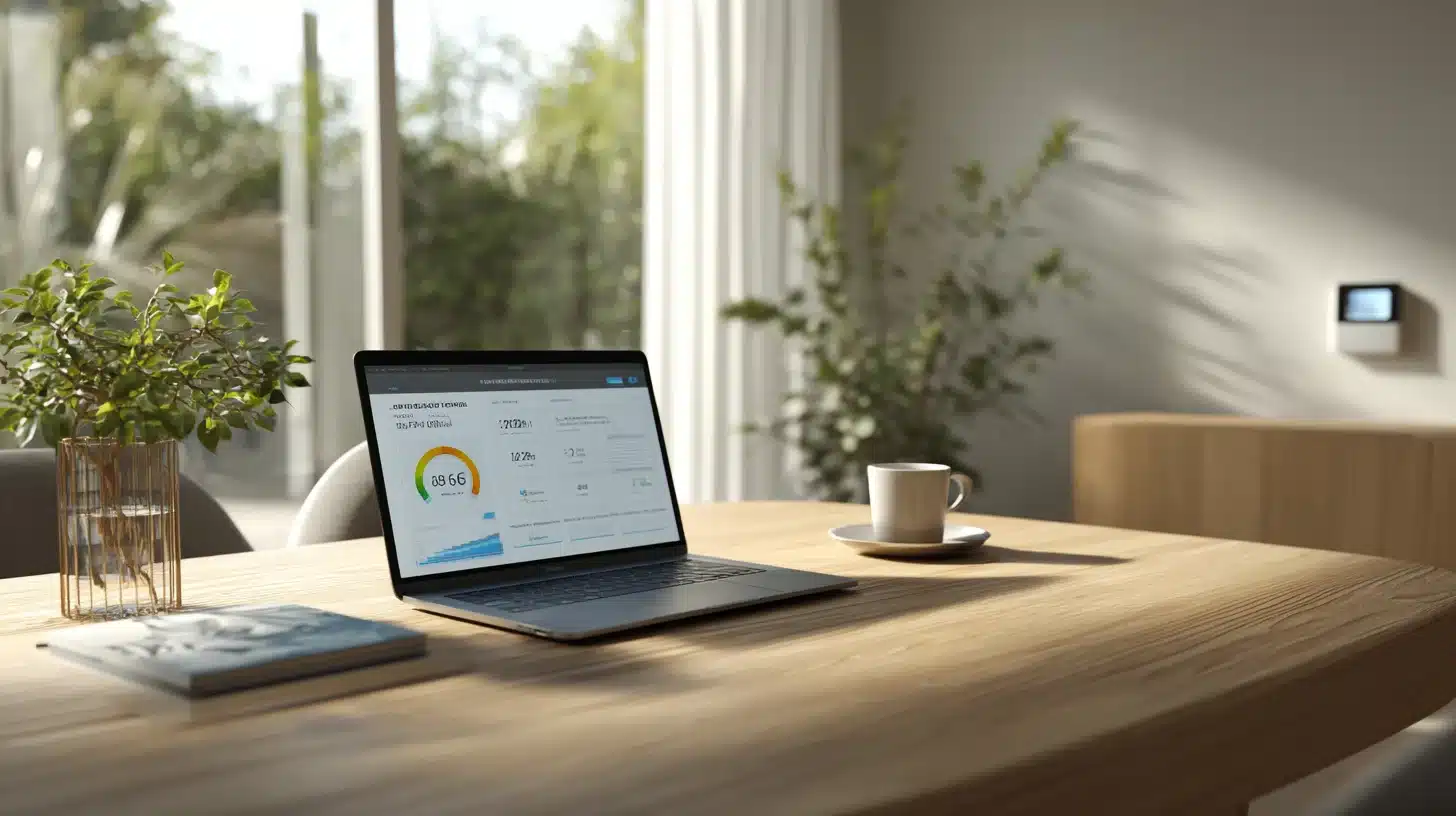
Billing Methods: Aconto vs. Actual Usage
A major source of confusion for expats is the Danish billing system known as Aconto.
Aconto Billing
Many providers use Aconto (on-account) billing. This means they estimate your future usage for the coming quarter and bill you in advance. They calculate this based on the historical consumption of the household.
Once the period is over, they check your actual consumption. If you used less than estimated, the difference is deducted from your next bill. If you used more, the extra cost is added. This can result in confusing bills where you are paying for the next three months while simultaneously being adjusted for the previous three.
Actual Usage Billing (Bagudbetalt)
Some modern providers offer monthly billing based on actual consumption (bagudbetalt). You receive a bill at the beginning of the month for exactly what you used in the previous month. This is much more transparent and easier for expats to understand. When searching for providers, look for terms like “Månedsregning” or “Betaling for faktisk forbrug.”
Overview of Popular Providers
The market is crowded, but certain providers are frequently encountered by newcomers.
Established Energy Companies
Companies like OK electricity and Andel Energi are large, established players. OK is a cooperative owned by its customers, often bundling electricity with fuel cards and heating solutions. These companies are generally stable and offer reliable customer service, though they may not always have the absolute lowest raw price per kWh.
Challenger Brands
Newer companies often compete aggressively on price and digital features. Velkommen electricity is known for heavy marketing and introductory offers. These offers can be attractive, but customers must read the fine print regarding what happens to the price after the introductory period ends.
Similarly, Modstrøm electricity focuses heavily on energy improvements. They often offer free energy consultations or discounts on energy-saving products like LED bulbs. Their business model encourages consumers to reduce overall consumption rather than just selling kWh.
Regional Providers
Many providers started as local utility companies before the market liberalized. Aura electricity is an example of a company with strong regional roots that now serves customers nationwide. These companies often have a reputation for stability and invest in local infrastructure projects or community support.
Green Energy in Denmark
Denmark is a world leader in wind energy. On windy days, wind turbines can generate more than 100% of the country’s electricity demand. However, the physics of the grid means all electricity is mixed. The electrons coming out of your socket are the same regardless of which provider you choose.
When you buy a “green” electricity product, you are purchasing Guarantees of Origin. The provider guarantees that for every kWh you consume, they purchase a certificate from a renewable energy producer (wind, solar, or biomass). This subsidizes the renewable sector.
Some providers include green certificates in their standard price, while others charge a small extra fee for a “Climate Choice” add-on. Be aware that “Leaf” icons or green branding do not always mean the electricity is cheaper; it simply refers to the environmental certification.
Contract Terms and Lock-in Periods
Consumer protection laws in Denmark are strong, but you must still be aware of contract terms.
Bindingsperiode (Lock-in Period)
For private consumers, the maximum legal lock-in period (bindingsperiode) is six months. Even if a contract states a longer duration, you can legally terminate it with one month’s notice after five months have passed.
Many variable price contracts have no lock-in period at all, allowing you to switch providers from month to month.
Introductory Offers
Providers often attract new customers with very low prices or subscription waivers for the first 3 to 6 months. These are legitimate, but the price often reverts to a higher standard rate automatically once the offer expires. It is the consumer’s responsibility to monitor their contract status.
The Structure of the Danish Energy Market
The Danish electricity market is divided into two main layers. It is crucial to understand this separation because you will interact with both entities, even if you only receive a bill from one.
The Grid Operator (Netselskab)
The grid operator owns the physical cables, meters, and infrastructure that deliver power to your home. This company is determined solely by your geographical location. You cannot choose or change your grid operator. They have a monopoly in their specific region.
Examples of grid operators include Radius (Copenhagen area), Cerius, and N1 (Jutland). Their responsibility is to maintain the grid, fix power outages, and handle the technical reading of your electricity meter. They charge a fee for the transport of electricity, which is regulated by the state to ensure fairness.
The Electricity Provider (Elleverandør)
The electricity provider is the commercial entity you choose to buy power from. These are the companies that advertise prices and compete for your business. They purchase electricity from the wholesale market (Nord Pool) and resell it to you.
When you look for electricity providers Denmark, you are comparing these commercial companies. They handle customer service, billing, and contract terms. In most cases, your electricity provider will send you a single bill that includes their charges for the energy as well as the grid operator’s fees for transport and state taxes.
The DataHub and Eloverblik
All electricity data in Denmark is centralized in a system called the DataHub, run by Energinet (the state-owned enterprise that owns the overall transmission grid).
As a consumer, you can access your own data via the website Eloverblik.dk. You log in with MitID. Here you can see:
- Your historical consumption down to the hour.
- Who your current electricity provider is.
- The technical details of your meter.
- Your estimated annual consumption.
This tool is valuable if you want to verify that your provider is billing you for the correct amount of kWh.
Electrical Standards and Safety
While not part of the billing contract, understanding the physical electrical system is relevant for anyone setting up a home.
Voltage and Plugs
Denmark uses 230V at 50Hz. The plugs are Type K (unique to Denmark with a smiley-face earth pin), but Type C (standard European two-pin) and Type E/F (Schuko) also fit into the sockets. However, using a Schuko plug in a Danish socket means the device is not grounded unless you use an adapter.
Safety Switch (HFI/HPFI)
Every Danish home has an electrical panel with an HFI or HPFI relay (Residual Current Device). This switch cuts the power instantly if it detects a leak to the ground, preventing electrocution. If your power goes out suddenly, check this panel. If the switch has flipped down, try to flip it up. If it flips down again immediately, you have a faulty appliance plugged in.
Moving Out
When you leave a property, you must actively cancel your electricity contract or move it to your new address. You should inform your provider of your move-out date.
On the final day, you should take a reading of the meter. While the smart meter sends this data automatically, having your own photo prevents disputes if the next tenant delays their registration. You are liable for the consumption until the lease ends or the next tenant registers a contract.
If you are leaving Denmark permanently, you must provide a forwarding address (or email) for the final bill. This final bill will reconcile your Aconto payments against your actual usage. If you paid too much, the company will refund the difference to your NemKonto (the bank account linked to your CPR number).